
“If you could have any superpower, what would it be?”
Perhaps this question has been used so many times as a conversation starter or classroom icebreaker that it has officially earned retirement. Yet, despite our collective exhaustion with the question, humanity’s fascination with superpowers shows no sign of disappearing. Superhero movies continue to rake in billions of dollars, and our obsession with characters who can fly, read minds, bend reality, see through walls, or lift cars with one hand seems to be remarkably persistent.
And really, why wouldn’t it be? There is something fascinating about the idea that an ordinary human being might possess extraordinary abilities.
The pessimist in me might suggest that our fascination with superpowers is simply an extension of the human ego. We want to be special. We want to be stronger, smarter, and more important than everyone else. Perhaps superheroes are just wish-fulfillment dressed up in spandex?
Or maybe it goes deeper.
Perhaps our fascination with superpowers comes from an innate understanding that human beings are capable of far more than we currently comprehend. Possibly some part of us recognizes that human perception may extend beyond what we ordinarily experience through our five physical senses—sight, hearing, touch, smell, and taste.
Consider the powers we have imagined throughout history: clairvoyance, telepathy, precognition, telekinesis, heightened intuition, or even the ability to sense another person’s emotions. Whether these “gifts” are interpreted literally, symbolically, psychologically, or spiritually, their steadfast appearance across cultures is both interesting and significant.
The Three Minds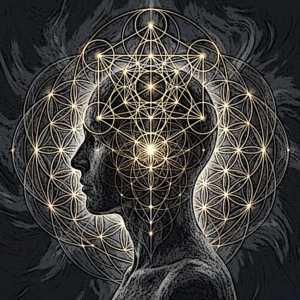
The Hermetic Tradition, an ancient philosophical system rooted in the teachings of the mythical sage Hermes Trismegistus and developed over centuries as a multifaceted approach to self-knowledge and spiritual discovery, offers an interesting framework for exploring this possibility. Within this tradition, consciousness can be understood as operating through three different levels.
There is the self-conscious mind—the reasoning, attention-focusing, waking mind that we generally identify as “I.” It is the part of us reading these words right now, deciding whether to agree with me, wondering what’s for lunch, and occasionally remembering something embarrassing we did in seventh grade.
Then there is the subconscious mind, operating beneath ordinary awareness. On the most obvious level, it regulates countless functions that keep us alive: breathing, heartbeat, digestion, hormonal regulation, and other processes that would be terribly inconvenient to consciously manage.
And then there is the super-consciousness—the divine spark within us, sometimes described as the Individuality or Higher Self. This level of consciousness is associated with insight, intuition, prophetic dreams, inspiration, and what might be described as an inner yearning to return to a place greater than the one we currently inhabit.
To understand the nature of a blended consciousness—and the development of our seeming “superpowers”—we first need to take a deeper look into subconscious mind. Its role in our growth and development transcends the familiar functions of regulating bodily processes and storing memories. These additional functions can be thought of in two broad categories: 1) Creating our subjective reality, and 2) Acting as a bridge for our Superconscious Mind.
Your Subconscious Is Listening
First, the subconscious mind is the great creator. It not only keeps our bodies alive, but it also simultaneously shapes our experience of the external world and our own subjective reality. It influences how we see ourselves, how we navigate relationships, how we approach work, and even what we notice—or fail to notice—in our everyday lives. And the subconscious is always listening.
It responds to our thoughts, emotions, beliefs, expectations, and mental imagery. It takes the pictures we continually project onto the screen of our minds and then, in a sense, tries to make sense of the world through them. It doesn’t ask whether those assumptions are objectively true, reasonable, or particularly helpful. It simply works with the information it is given. The more often a thought is repeated, the more emotionally charged it is, and/or the more consistently our actions reinforce it, the more that thought becomes part of our daily experience.
Consider someone who repeatedly tells themselves, “Nobody likes me.” They may walk into a room and unconsciously interpret every neutral expression as rejection. Someone doesn’t say hello? See? They don’t like me. Someone does say hello? They’re probably just being polite.
The subconscious has received the assignment.
Now consider someone who believes that opportunities are everywhere. They hear a coworker mention a problem and think, “I wonder if I could help with that.” They read an article about something they’ve always been curious about and follow the link instead of scrolling past it. Someone mentions an unusual job, a new class, or a chance to collaborate, and instead of dismissing it as irrelevant, they think, “Maybe there’s something here.”
The opportunities themselves may not be any more plentiful than they were for the first person. The difference is that one person’s subconscious is scanning the environment for evidence that doors are closed, while the other’s is looking for doors that might be worth opening.
The subconscious has a very different assignment.
So, you might reasonably ask: If our thoughts, words, and actions are so influential, why is it so difficult to change an unwanted habit or create the reality we want? Can’t we simply think our way into the life we desire?
Not quite.
The problem is that most of us send contradictory instructions to the subconscious all day long, often without realizing it.
“I am confident.”
“No, I’m not.”
“I deserve success.”
“I’ll probably fail.”
“People are good.”
“People can’t be trusted.”
“I am capable.”
“I can’t do this.”
This is just a small sample of the inner conversation constantly taking place beneath the surface of our waking minds. And then we wonder why our internal operating system seems confused.
But perhaps confusion isn’t really the problem.
The problem is that we tend to give both sides of the argument equal authority. Human experience is full of opposites: light and darkness, attraction and resistance, confidence and doubt, hope and fear. There is rarely one without the other. The goal, then, may not be to eliminate the opposing voice, but to become conscious of which voice we choose to believe—and which one we allow to steer the ship.
The Subconscious as a Bridge
Perhaps the most intriguing way to understand the subconscious is not merely as a storage facility for forgotten memories or a biological autopilot, but as an intermediary between our waking consciousness and the Superconscious, or Higher Self.
In this capacity the subconscious provides access to a vast reservoir of information, far greater than the waking knowledge the personality can ordinarily comprehend. Not simply information about ourselves, but potentially a profound awareness of reality itself—a nonlinear reality in which past, present, and future may not be as separate as they appear from our ordinary perspective. This gives us another way to think about intuition.
Have you ever suddenly known something without knowing how you knew it?
Have you ever thought about someone moments before they called?
Have you ever had a dream that seemed strangely significant?
Have you ever walked into a situation and immediately thought, Something isn’t right here, even though you couldn’t explain why?
Modern psychology offers several possible explanations for these experiences. The Hermetic tradition offers another: perhaps the subconscious is receiving information that the conscious mind has not yet learned how to recognize. If the subconscious is, in fact, connected to the Higher Self, then intuition becomes something more than a random feeling or unexplained hunch, it becomes a potential form of communication.
And that communication isn’t necessarily dramatic. Your inner guidance may not arrive with flashing lights, a choir of angels, or a booming voice from the heavens. Sometimes it is simply that quiet feeling that says, Don’t go there. Or, Call that person. Or, You already know the answer.
The challenge is learning to distinguish genuine inner guidance from fear, wishful thinking, habit, and the occasional overwhelming desire to eat an entire bag of cookies because apparently the universe has decided that this is the moment of spiritual testing.
So Where Is the Superpower?
This brings us back to our original question.
“If you could have any superpower, what would it be?”
Maybe the more interesting question is:
What if you already have one?
The Hermetic practitioner seeks to develop focus, concentration, self-knowledge, belief, imagination, virtue, and honesty. The goal is not simply to acquire spectacular powers but to develop a conscious relationship with the various and unseen levels of one’s own Being. From this perspective, the development of consciousness can produce abilities that might feel surprisingly “superhuman.”
You may become more intuitive, recognize patterns more quickly, understand the many layers of Self, you may become more aware of the needs of other people, you may begin to recognize opportunities that previously remained invisible. You might even be better prepared for life’s many circumstances and happenings because something within you sensed them before your conscious mind could explain them. And perhaps most importantly, you may begin to understand your own life with greater clarity.
The Hermetic tradition goes even further, suggesting that with disciplined imagery, meditation, concentration, and alignment with the Higher Self, we can participate in shaping our experience of reality.
That doesn’t mean we can simply think ourselves into anything we want while ignoring circumstance, responsibility, or the complexity of life. Reality has a funny way of reminding us that we are not omnipotent. But our inner world matters. Our beliefs matter. Our expectations matter. The images we repeatedly hold in consciousness matter. And perhaps our greatest mistake is underestimating how much they matter.
The Real Superpower
Developing a healthy and informed relationship with your subconscious takes effort. It requires consistency, self-honesty, patience, and a willingness to examine the beliefs that quietly run our lives.
But the potential reward is enormous.
You may never develop laser vision. You may never lift a building with your mind. You may never become invisible, fly, or develop the ability to fling a villain across a parking lot using telekinesis.
But you might discover something much more valuable. You might recognize the beliefs shaping your relationships. You might discover patterns that have been quietly directing your choices for years. You might learn to listen to your intuition. You might become more conscious of the images you continually project into your own mind.
And eventually, you might begin to understand who you really are.
Perhaps that is the superpower we have been searching for all along.
So, the next time you find yourself wondering why your life doesn’t seem to mirror your deepest desires—or wishing you had a superpower—pause for a moment.
Don’t look toward the sky for a cape.
Look inward and ask yourself:
What’s in my subconscious?