
Over the past several weeks, I have had the chance to contemplate the meaning of hope and how it applies to those on the Path of Return. A recent series of conversations with a dear friend over a long and stimulating New England summer weekend inspired me to look more deeply into the concept of hope, and thanks to her inspiration and insights, I discovered that hope is not a shallow, “throwaway” term (“Oh, I hope that…”) but is a powerful concept imbued with layers of meaning.
Hope, along with Faith and Charity, is considered a theological virtue, and as such, it can be described as “the desire of something together with the expectation of obtaining it. The Scholastics say that it is a movement of the appetite towards a future good, which though hard to attain is possible of attainment.” Freemasonry also addresses hope as a theological virtue, which “ends in fruition,” or fulfillment, and the anchor as a symbol of hope also figures as a Masonic hieroglyphical emblem. In my profession as a Naval officer, I have also frequently heard – and have frequently given – the admonition that “hope is not a course of action.”
The ancients contemplated hope, though perhaps not as frequently as other philosophical concepts. In his Philebus dialogue, Plato discusses hope in the context of the “pleasure of anticipation” and as being essential to human agency.
Similarly viewing how hope allows us to consider the future, Aristotle pairs hope with courage – while not all hopeful people are courageous, those who are courageous are hopeful since hope creates the confidence needed to have courage.
Later, St Thomas Aquinas binned hope into two categories – first, as a passion and not a virtue (since it can have either a deficiency or an excess) directed towards finite, temporal good(s), and second, as a theological virtue directed towards ultimate happiness and union with the Divine. More recent analytical philosophers have arrived at an “orthodox definition” or “standard account” of hope which pairs a desire for an outcome with a belief concerning the outcome’s probability – a definition remarkably in line with the first cited explanation of the theological virtue of hope (Stanford Encyclopedia of Philosophy).
In our discussions of hope and how we can apply it to our lives, my friend brought up Emily Dickinson’s poem where hope is likened to a bird (“Hope is the thing with feathers”) with us all the time (“sings the tune…and never stops at all”) and which demands nothing of us (“Yet never in Extremity, it asked a crumb of me”). 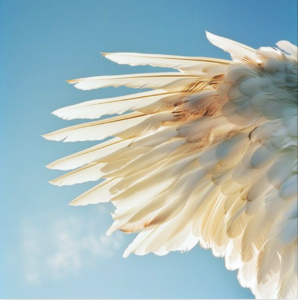 She and I instead came to a radically different conclusion from Dickinson – hope very much demands participation from us and is not “a thing with feathers” just accompanying us as we live our lives.
Hope requires work and involvement; after all, it hinges on a probability of an outcome – a probability which we can influence via our actions. Rather than passively waiting while silently “hoping,” we can increase the probability of our desired outcome through our work. For example, if we hope to be selected to play a sport on a competitive team, we need to practice the sport, and we need to fulfill whatever requirements the selection process dictates. If we hope to be admitted to a selective academic program, we need to ensure our grades are high enough, we score well enough on any admissions exams, and we meet required deadlines. This involvement will certainly require sacrifice; we have a finite amount of time and resources to commit, and we should align those towards the outcomes we truly hope for – whether that be a temporal good like a job or a relationship, or the more lasting quest of return to the Divine.
In addition to the external work needed to increase the probability of a desired event happening, just as much – if not more – work must be accomplished internally. There are several principles of the Western Esoteric Tradition that can be applied to all of us who hope. In The True and Invisible Rosicrucian Order, Paul Foster Case writes that “every form of spiritual energy is subject to the control and direction of the form above it” and points to the imagery of Key 8 (Strength) as an important encapsulation of this teaching. 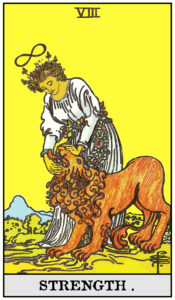 We learn we can control our subconscious from the level of our self-conscious state, a feat just as seemingly impossible at the outset as Key 8’s image of a petite woman controlling a wild lion almost twice her size.
Another key tenet Case mentions is that “mental imagery is the door to the Higher Knowledge.” The images we create are just as real as the world we perceive around us, and our mental images are a precursor to what we can create in the physical. Just as every building, invention, or work of art started as a thought, the end state of what we hope for also starts with a thought that we can build upon until it comes into fruition. It is also interesting to note how Case characterizes hope in the Rosicrucian tradition. He says the Rosicrucian path does not offer hope in a more metaphysical sense, “because hope has given place to certainty” when it comes to existence beyond the physical. His notion is certainly in keeping with traditional philosophical definitions of hope, which presume a probability as opposed to a certainty or an impossibility – if something is certain, it no longer becomes a hope.
Until we are able to discover that certainty beyond physical existence just discussed, we are left to hope – and to work towards our goals. Whether it is our progress along the Path of Return or in our more day-to-day matters, we can increase the probability of a hoped-for event via both physical and mental means. As we make outward preparations towards a goal, we can also envision ourselves overcoming obstacles along the path, and picture ourselves as having fulfilled our goal. This is yet another way to train – and transform – our subconscious via our self-conscious and is just as critical as anything we do in the physical world.
With that in mind, consider what you truly hope for – is it really your desire and does it have a probability of occurrence? What are you doing to prepare for it? Do you meditate upon it and see yourself as having attained it? How can you act – and think – with hope as opposed to passively waiting?
References:
ARISTOTLE, Nicomachean Ethics., 2nd Edition, Terence Irwin, trans. Indianapolis: Hackett Publishing Company, 1999.
BLOESER, Claudia and Titus Stahl, “Hope”, The Stanford Encyclopedia of Philosophy (Summer 2022 Edition), Edward N. Zalta (ed.), URL = <https://plato.stanford.edu/archives/sum2022/entries/hope/>.
CASE, Paul Foster. The True and Invisible Rosicrucian Order. Boston: Weiser Books, 1989.
DELANY, Joseph. “Hope.” The Catholic Encyclopedia. Vol. 7. New York: Robert Appleton Company, 1910. URL=<https://www.newadvent.org/cathen/07465b.htm>.
DICKINSON, Emily. “’Hope’ is the thing with feathers.” The Poetry Foundation. URL=< https://www.poetryfoundation.org/poems/42889/hope-is-the-thing-with-feathers-314>.
KREEFT, Peter. A Summa of the Summa. San Francisco: Ignatius Press, 1990.
PLATO. Philebus. In Plato: Complete Works, John M. Cooper, ed. Indianapolis: Hackett Publishing Co., 1997.